
Burnout is not just ordinary tiredness after a long day. This condition runs far deeper than physical fatigue that disappears after a good night’s sleep. If you feel you have rested enough yet still feel empty when you walk into work, there is a strong chance you are experiencing burnout.
Daftar Isi
- 1 What Is Burnout? A Quick Definition You Need to Know
- 2 Burnout by the Numbers: How Big Is This Problem in the Workplace?
- 3 Signs of Burnout at Work That Are Often Overlooked
- 4 Burnout vs. Ordinary Work Stress: What Is the Difference?
- 5 Why Are Managers and Leaders More Vulnerable to Burnout?
- 6 The 5 Stages of Burnout You Need to Watch Out For
- 7 How to Overcome Burnout: What Actually Works?
- 8 Are You Experiencing Burnout Right Now? Find Out
- 9 FAQ: Frequently Asked Questions About Burnout
What Is Burnout? A Quick Definition You Need to Know
| Aspect | Details |
|---|---|
| Official Definition | A syndrome resulting from chronic workplace stress that has not been successfully managed (WHO, ICD-11) |
| Medical Status | An occupational phenomenon, not a standalone medical diagnosis |
| Primary Cause | Excessive work pressure combined with the absence of a stress management system |
| Who Is at Risk | Managers, ambitious professionals, leaders, overachieving employees |
Burnout is a state of extreme emotional, physical, and mental exhaustion that develops from prolonged exposure to workplace stress without adequate recovery. The World Health Organization (WHO) officially classifies burnout as an occupational phenomenon syndrome under ICD-11, defined by three core symptoms: feelings of energy depletion or exhaustion, increased mental distance from one’s job, and a sense of ineffectiveness and lack of accomplishment.
This condition does not appear overnight. Burnout develops gradually, and that is precisely what makes it so dangerous.
Read Also: How to Overcome Burnout: Why Many Professionals Do Not Even Realize They Have It
Burnout by the Numbers: How Big Is This Problem in the Workplace?
| Finding | Figure | Source |
|---|---|---|
| Global employees at risk of burnout | 82% | Fortune/Yahoo Finance, 2025 |
| Southeast Asian workers (including Indonesia) experiencing burnout | 62.9% | Frontiers in Public Health, 2024 |
| Middle managers with the highest burnout rate | 54% | High5Test, 2024 |
| Employees asked to work beyond their job description weekly | 77% | Forbes via TeamOut, 2025 |
The data above points to one undeniable truth: burnout is not a personal failure or something to be ashamed of. It is a systemic crisis of the modern workplace that affects more than half of all active professionals, including the managers and leaders who appear most resilient from the outside.
Notably, McKinsey research found that Asian employees report burnout at higher rates than the global average, driven by hierarchical workplace cultures, long working hours, and presenteeism — showing up physically while being mentally checked out.
Signs of Burnout at Work That Are Often Overlooked
| Domain | Signs of Burnout |
|---|---|
| Emotional | Irritability, emotional emptiness, cynicism toward work, lack of motivation even after rest |
| Cognitive | Difficulty concentrating, overthinking, analysis paralysis, every decision feels overwhelming |
| Physical | Headaches, sleep disturbances, frequent illness, chronic fatigue without a clear cause |
| Behavioral | Withdrawal from others, declining productivity, frequent mental absenteeism, worsening imposter syndrome |
WHO identifies three core dimensions of burnout: first, feelings of energy depletion or exhaustion. Second, an increasing mental distance from one’s job or feelings of cynicism. Third, a reduced sense of professional effectiveness and accomplishment. These three dimensions reinforce each other until they form a cycle that becomes very difficult to break on your own.
Burnout vs. Ordinary Work Stress: What Is the Difference?
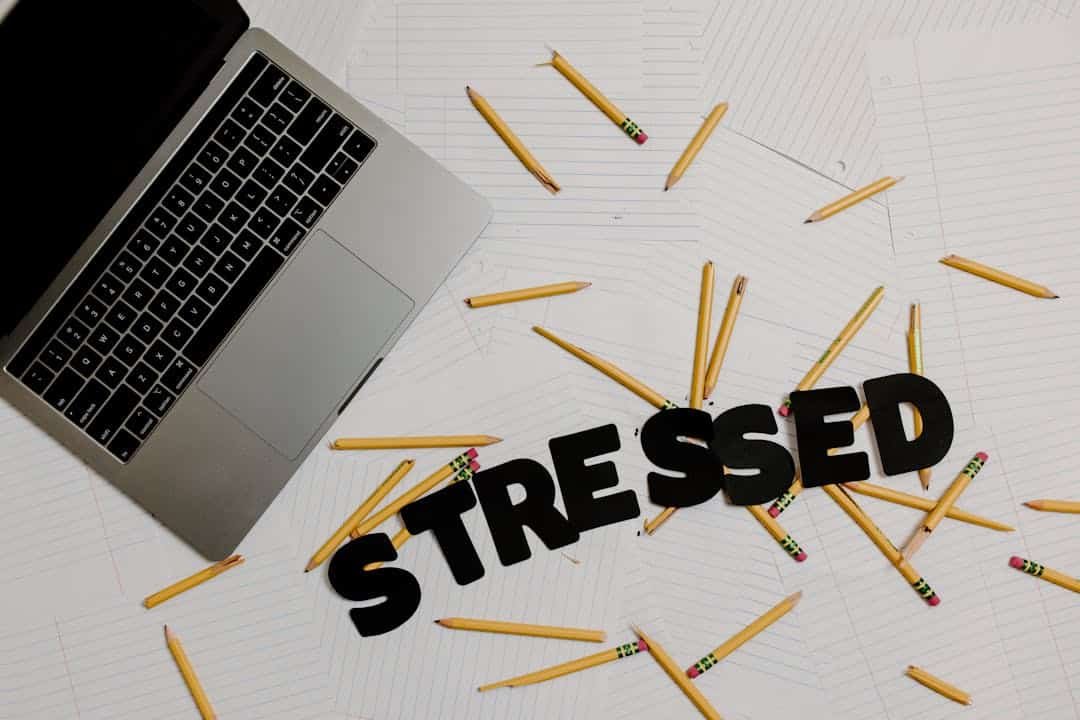
Ordinary work stress is temporary, and you can still find a way through it. Burnout, on the other hand, makes you feel as though no solution exists. Burnout is context-dependent and only occurs as a result of chronic workplace stress, whereas depression can arise from many different causes.
This distinction matters because the approach to recovery is fundamentally different. Burnout requires a systematic change in how you work, not simply a short vacation.
Read Also: 10 Signs You Are a People Pleaser at Work and How to Stop
Why Are Managers and Leaders More Vulnerable to Burnout?

Being a manager or leader places you squarely between pressure from above and responsibility for the team below. Middle managers record the highest burnout rate at 54%, significantly above the general employee average.
The pattern that keeps repeating looks like this: an ambitious professional works hard, earns a promotion, and then carries those same overworking habits into a higher-stakes role, without building a proportionate mental resilience system. As a result, burnout strikes right at the peak of their career.
Without realizing it, many managers experience classic burnout symptoms such as waking up with unexplained anxiety, struggling to make simple decisions, or feeling empty even when KPI targets are met.
Read Also: Self Audit 101: Start Here to Understand Your Current Condition
The 5 Stages of Burnout You Need to Watch Out For

Burnout does not arrive all at once. It progresses through identifiable stages, which means you have a window of opportunity to stop it before it takes full hold:
- Honeymoon Stage — Excessive enthusiasm, over-commitment, and ignoring your own needs.
- Onset of Stress — Early fatigue, frustration, and difficulty concentrating begin to surface.
- Chronic Stress Stage — Procrastination increases, irritability grows, and you start withdrawing socially.
- Burnout Stage — Total exhaustion, cynicism toward everything, and physical symptoms begin to appear.
- Habitual Burnout Stage — Burnout becomes your new normal, making it extremely difficult to break without professional support.
Recognizing which stage you are currently in is the single most important first step. The earlier you become aware, the faster your recovery can begin.
How to Overcome Burnout: What Actually Works?

Burnout is not a competency problem. You are not experiencing it because you are weak or incapable. You are experiencing it precisely because you have been pushing yourself too hard without the right systems in place.
Here are several concrete steps that have proven to help:
- Build healthy work boundaries — Learning to say “no” without guilt is a skill you can develop with practice.
- Separate your identity from your performance — Your worth as a person is not the same as your KPI numbers.
- Seek structural support — Professional coaching gives you a space to dismantle the thought patterns that worsen burnout, rather than simply offering temporary motivation.
- Implement a daily priority system — The goal is not to work harder, but to work smarter using a measurable and sustainable system.
Beyond these steps, rediscovering meaning and purpose in your work through an Ikigai mapping exercise has also been shown to accelerate long-term burnout recovery.
Are You Experiencing Burnout Right Now? Find Out

Burnout that goes unaddressed will not resolve on its own. On the contrary, it will quietly erode your productivity, your health, and your happiness until you can no longer recognize how far you have fallen.
The best first step is to measure your current condition objectively. From there, you can take targeted, purposeful action.
Mas Moechammad Noer Iman, ACC, widely known as Coach Iman, is an internationally certified ICF Professional Coach with over 27 years of experience in global industries, including Unilever and a global BPO company where he led a team of more than 300 personnel across APAC, EUAF, and the Americas. He has completed over 120 hours of coaching sessions with 80+ managers and professionals, and understands firsthand how burnout attacks even the most outwardly successful people.
You have already made the hard decision. Now let me make the next step easy for you.
This is your Final Commitment to stop fighting alone. On the other side of this button, your Emergency Toolkit and Mentoring schedule are already waiting.
The risk of this transaction is ZERO. With a 100% Money-Back Guarantee, the only real risk you face is doing nothing and letting burnout win again tomorrow morning.
Secure your Founding Client slot now, and sleep soundly tonight.
Get the Identity Firewall Kit
Join the Clarity System Upgrade
FAQ: Frequently Asked Questions About Burnout
1. Is burnout the same as depression?
Burnout and depression share overlapping symptoms, but they differ in context. Burnout occurs exclusively as a result of chronic, unmanaged workplace stress, whereas depression can arise from a wide range of causes. That said, the two conditions can worsen each other, so both warrant serious attention and professional support.
2. How long does it take to recover from burnout?
Recovery time varies considerably depending on how long the condition has been present and what interventions you put in place. With structured professional coaching and meaningful changes to your work system, many professionals begin experiencing significant improvement within the first four to eight weeks.
3. Can a high-performing manager experience burnout?
High-performing managers and professionals are, in fact, among the most vulnerable groups. Ambition, perfectionism, and the habit of saying “yes” to every request are the most common burnout triggers among leaders. Data shows that middle managers record the highest burnout rate at 54%.
4. What is the difference between burnout and ordinary fatigue?
Ordinary fatigue resolves after sufficient rest. Burnout does not. If you have slept well, taken a vacation, and still feel empty and unmotivated when returning to work, that is a burnout signal that requires immediate attention.
5. Can coaching help someone recover from burnout?
Yes. Professional coaching helps you identify the thought patterns and work habits at the root of your burnout, then build a new, more sustainable operating system. This differs from psychological counseling: coaching focuses on solutions and forward momentum, rather than processing past trauma.