Daftar Isi
Self-Audit 101: How to Use SWOT Analysis to Unlock Hidden Career Opportunities (Free Workbook!)
Have you ever felt like this: you are at a career crossroads. You don’t hate your job, but you’re not excited about it either. You feel stuck, stagnant, as if you are going nowhere.What do we usually do when we feel this way? We panic and open job listing websites, endlessly scrolling, hoping to find a magical position that will solve all our problems. We sign up for trending online courses, hoping a new certificate will bring clarity.We look for answers everywhere, except in the one place that matters most: within ourselves.Without an honest understanding of who we are, every career move feels like a gamble. We jump into new opportunities only to realize a few months later that the feeling of stuck has returned.What if there was a way to stop guessing? What if you could have a “Google Maps” for your career—a clear map that shows where you are, where you want to go, and the best route to get there?That tool exists. It’s called SWOT Analysis. And while it may sound like complicated business jargon, it is one of the simplest and most powerful tools for self-auditing. This article is your step-by-step guide to using SWOT—not for a company, but for your most important asset: yourself.What Is Personal SWOT Analysis (and Why You Actually Need It)?
Forget about boardrooms and business presentations for a moment. A personal SWOT analysis is a structured framework for reflection. SWOT stands for:- Strengths: Positive internal assets that you have.
- Weaknesses: Internal factors that may hold you back.
- Opportunities: External positive factors you can leverage.
- Threats: External factors that could endanger your career.
- You Gain Exceptional Clarity: The confusion in your mind turns into a structured map on paper.
- Your Confidence Increases: By explicitly knowing your strengths, you can be more confident in interviews, salary negotiations, or even speaking in meetings.
- You Know What to Improve: Identifying weaknesses is not meant to discourage you. Instead, it gives you a clear to-do list of areas to develop.
- You Make Smarter Career Decisions: You can choose opportunities that align with your strengths and proactively avoid or prepare for potential threats.
Practical Guide: Breaking Yourself Down, Quadrant by Quadrant
Prepare a piece of paper, open a new document, and divide it into four quadrants. Now, let’s fill them in together. The key is radical honesty, without judging yourself.Quadrant 1: Strengths – Your Greatest AssetsThis is the fun part. It’s time to acknowledge your strengths. Think about internal assets that give you an advantage.- Ask yourself:
- What formal qualifications are you proud of? (Bachelor’s degree with honors, Digital Marketing certification, leadership training).
- What hard skills do you have? (Proficient in Ms. Office, skilled in Canva design, fluent in English, understand basic coding).
- What soft skills do others often praise you for? (Communication skills, adaptability, reliability, honesty, being a good listener).
- What achievements in the past 1–2 years make you proud? (Completing a difficult project, exceeding sales targets, organizing a community event).
- What do friends, former bosses, or family say are your greatest strengths? (Sometimes they see what we don’t).
- Ask yourself:
- What bad habits do you often regret? (Procrastinating, overthinking before making decisions, difficulty saying “no”).
- What skills do you know you need to improve to stay competitive? (Public speaking, data analysis, writing professional emails).
- What do you fear or avoid at work? (Giving feedback, leading meetings, dealing with difficult clients).
- What constructive feedback have you received that is still relevant today?
- What experience or knowledge do you feel you lack? (Limited work experience, lack of specific certifications).
- Ask yourself:
- What trends are rapidly growing in your industry? (High demand for digital talent, the rise of green energy, etc.).
- What new technologies can help you work better or open new job opportunities? (AI for task automation, new project management tools).
- Who in your networking circle can open doors or provide valuable advice? (Friends at dream companies, successful seniors).
- Are there trainings, webinars, or courses (even free ones) that can improve your skills?
- Is your company planning new projects or expansions that you can join?
- Ask yourself:
- What obstacles are you currently facing in your job or industry? (Company downsizing, industry slowdown).
- What are your “competitors” (colleagues) doing better than you? (More certifications, more active networking).
- What technological developments could make your skills obsolete? (AI automating parts of your work).
- Are there weaknesses that could become serious threats if not addressed? (Example: overthinking can be dangerous when facing tight deadlines).
From Analysis to Action: Turning Insights into a Career Plan
Congratulations! You’ve just completed a deep self-audit. But don’t stop here. Filling in the four quadrants is only half the journey. The real magic happens when you start connecting the dots to create a concrete action plan.Let’s use this matrix to build strategies.Strategy S+O (Strengths + Opportunities): “Use Strengths to Capture Opportunities”This is your offensive strategy. Look at your Strengths and Opportunities. How can you use your greatest assets to leverage favorable conditions?- Action Example: “With my communication skills (Strength), I will actively join industry webinars (Opportunity) to expand my networking and find new opportunities.”
- Action Example: “To overcome my weakness in public speaking (Weakness), I will enroll in free online training (Opportunity) available this month.”
- Action Example: “To face the threat of more technically skilled competitors (Threat), I will leverage my strength in building strong client relationships (Strength) to provide unique value.”
- Action Example: “My habit of procrastination (Weakness) could become a serious threat during sudden deadline changes (Threat). I need to build a better time management system, possibly using the Pomodoro method.”
Conclusion: Self-Audit Is Not an Annual Event, but a Habit
SWOT analysis is a tool that transforms confusion into clarity. It forces you to pause from daily busyness and objectively evaluate yourself and your environment.This is not a one-time exercise. The job market keeps evolving, new opportunities arise, new threats emerge, and you continue to grow. Make self-audit a habit—a ritual you do every six or twelve months to keep your career “map” relevant and updated.Stop guessing your career direction. Start mapping it. The hidden career opportunities you’ve been searching for are often not found on job sites, but within an honest and deep understanding of yourself.Take a piece of paper, spend 30 quiet minutes, and start your self-audit today. Or…You can fill it out using this >> FREE workbook <<. You will get a Google Sheet copy that you can fill in—free for you. 100% free from viruses/malware/ads.(Type the code SWOT for free download)All the best!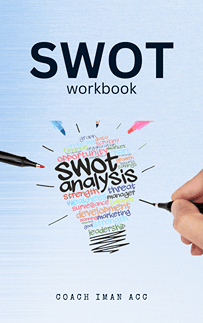
Post Views: 3