
You look productive on the outside, but quietly exhausted on the inside? 82% of employees are at risk of burnout in 2025. This is not just a statistic — it reflects the reality of many managers and professionals who go through each day without realizing they are draining the last of their energy reserves.
Anti-burnout habits are not something you build once and forget. You need to develop them systematically, day by day, week by week.
Daftar Isi
- 1 Why 21 Days Is the Right Starting Point
- 2 Week 1: Recognize and Map Your Fatigue Patterns
- 3 Week 2: Build a Real Recovery Routine
- 4 Week 3: Lock In Your Long-Term Anti-Burnout System
- 5 How to Maintain Consistency in Anti-Burnout Habits
- 6 Signs You Have Built Effective Anti-Burnout Habits
- 7 Conclusion
- 8 FAQ: Anti-Burnout Habits
- 8.1 1. Is building anti-burnout habits in 21 days enough?
- 8.2 2. What are the earliest signs someone is experiencing burnout?
- 8.3 3. How do I start anti-burnout habits if my schedule is extremely packed?
- 8.4 4. Are anti-burnout habits different for each person?
- 8.5 5. When do I need a coach’s help to overcome burnout?
Do You Feel Fine on the Outside, but Quietly Exhausted Inside?
Work pressure, overthinking, and burnout often creep in unnoticed. Many people continue to appear productive, while their mental and emotional energy is slowly running out.
Do not let stress accumulate until it affects your health, relationships, and career. The sooner you recognize it, the easier it is to address.
This test helps you understand your stress and burnout level more honestly, objectively, and clearly.
Why 21 Days Is the Right Starting Point

You may have heard that 21 days is enough to form a new habit. In fact, systematic research shows that habit formation takes an average of 59 to 66 days to become automatic. However, the first 21 days are the most critical phase because you are building the foundation of your brain’s neuroplasticity.
This early phase determines whether a new habit will stick or collapse. So, treat these 21 days as a minimum commitment, not a finish line.
| Symptom | How It Appears at Work | Long-Term Impact |
|---|---|---|
| Mental Exhaustion | Mind stays at work even after going home | Strained family relationships |
| Analysis Paralysis | Delaying decisions out of fear of being wrong | Drastic decline in productivity |
| Imposter Syndrome | Feeling unworthy after receiving criticism | Self-confidence erodes gradually |
| People Pleasing | Unable to say no even when overwhelmed | Uncontrollable workload |
Read also: 10 Signs You Are a People Pleaser at Work and How to Stop
Week 1: Recognize and Map Your Fatigue Patterns

You cannot fight something you have not fully understood yet. The first step in building anti-burnout habits is recognizing where your exhaustion comes from, when it feels heaviest, and what triggers it.
During the first 7 days, you focus on one simple practice: a 5-minute daily audit. Every night before bed, you write down three things that drained your energy and one thing that recharged it that day. This habit builds the self-awareness that becomes the foundation of all future change.
| Week | Main Focus | Daily Habit | Duration |
|---|---|---|---|
| Week 1 | Recognize Fatigue Patterns | 5-minute daily audit + identify stress triggers | 5–10 minutes/day |
| Week 2 | Build a Recovery Routine | Digital boundaries + one physical recovery activity | 15–20 minutes/day |
| Week 3 | Lock In with a New System | Morning ritual + weekly review + habit stacking | 20–30 minutes/day |
Remember: missing one day does not break a habit, but missing several consecutive days can disrupt your momentum. So you do not need to be perfect, but you do need to be consistent.
Read also: How to Overcome Burnout: What It Is and Why Many Professionals Do Not Realize It
Week 2: Build a Real Recovery Routine
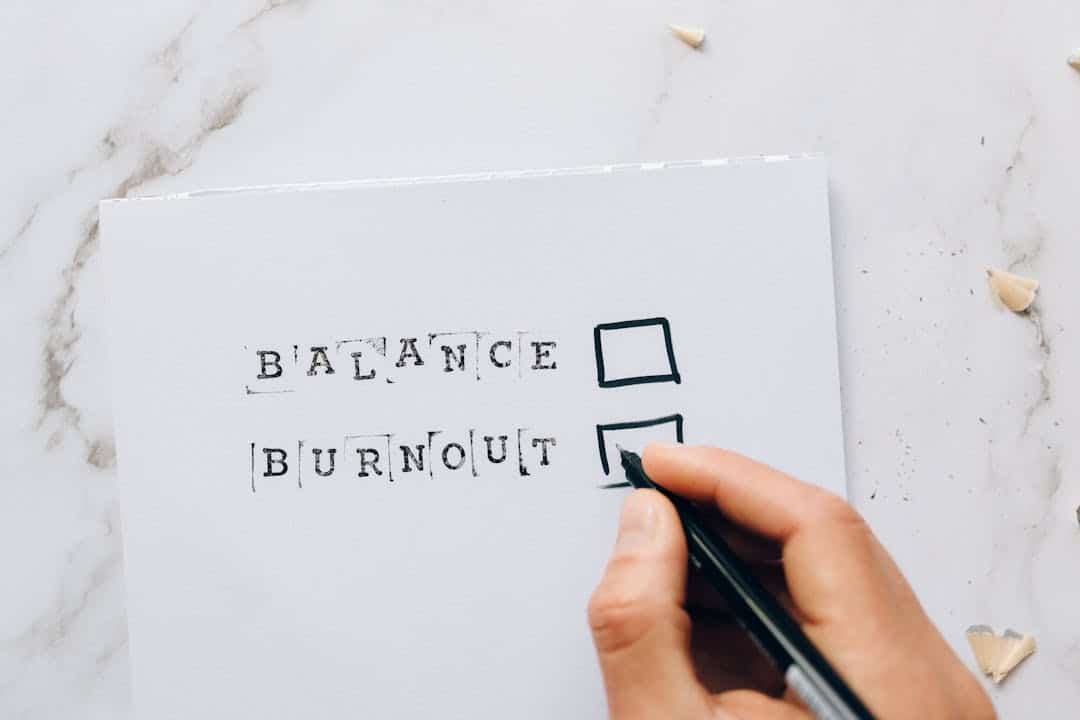
After recognizing your fatigue patterns in week one, the next step is creating an active recovery ritual. Research shows that professionals who maintain firm work boundaries report lower burnout rates and higher job satisfaction compared to those who allow those boundaries to blur.
In week two, you implement two core habits. First, you turn off work notifications 60 minutes after official working hours end. Second, you insert one physical activity for 15–20 minutes each day, whether walking, stretching, or light exercise.
Beyond that, you need to build an “identity firewall” between yourself as a professional and yourself as a complete human being. This concept is at the core of the approach developed by Coach Iman in his professional coaching program: your self-worth is not the same as the KPI numbers on your computer screen.
“The best people often burn out not because they lack ability, but because they are too hard on themselves.”
— Mas Moechammad Noer Iman ACC (Coach Iman), Founder of iPositiveMind
Read also: 5 Easy Steps to Negotiate Your Salary as a Manager
Week 3: Lock In Your Long-Term Anti-Burnout System

In week three, you are no longer just trying — you are building a system. A structured approach has been proven to increase the success rate of habit formation by up to 64% compared to unplanned efforts. You need to leverage the habit stacking technique: attaching a new habit to an existing routine.
For example: after you finish your morning coffee, you write down one main priority for the day. After you close your work laptop, you perform a “closing the day” ritual such as reading or a short walk. This technique makes anti-burnout habits an organic part of your day, not an additional burden.
| Trigger (Anchor Habit) | New Habit | Anti-Burnout Benefit |
|---|---|---|
| After morning coffee | Write 1 main priority for the day | Reduces analysis paralysis |
| Before the first meeting | Three deep breaths for 30 seconds | Lowers cortisol and anxiety |
| After closing the laptop | 5-minute “closing the day” ritual | Breaks the mental loop about work |
| Before sleeping | 5-minute daily audit | Builds self-awareness and gratitude |
Read also: Self Audit 101: How to Understand Yourself More Deeply
How to Maintain Consistency in Anti-Burnout Habits
Consistency is the biggest challenge. In Southeast Asia including Indonesia, the burnout rate among full-time workers reaches 62.9%, and most cases occur not because of a lack of intention, but because of the absence of an adequate support system.
You need three key elements to maintain consistency. First, you need an accountability partner or coach who monitors your progress regularly. Second, you need to track your progress visually, whether with a calendar, journal, or simple app. Third, you must celebrate small wins every time you successfully maintain a habit, because your brain needs positive signals to form new neural pathways.
Remember that structured mindfulness-based interventions have been proven to reduce burnout by up to 36% in professional groups who follow them consistently. This means real change requires structure, not just determination.
Read also: Bonus: Your IKIGAI Map – Discover the True Meaning of Your Work
Signs You Have Built Effective Anti-Burnout Habits

How do you know these habits are genuinely working? There are three signals to watch for. First, you start waking up in the morning without the weight of anxiety hanging over you. Second, you are fully present at the dinner table with your family without your mind drifting to work. Third, you make decisions faster and more calmly without getting trapped in the endless “what if” cycle.
If you have not felt all three signals after 21 days, that is not failure. That is a signal that you need more structured and personal guidance to uncover the root of the mindset holding you back.
Read also: Career Planning and Self-Development Articles – iPositiveMind
You have already made the hard decision — now let me make it easy.
This payment is your Final Commitment to stop struggling alone. On the other side of this button, your Emergency Toolkit and Mentoring schedule are already waiting.
The risk of this transaction is ZERO. With a 100% Money-Back Guarantee, the only risk you face is if you do not act and let overthinking win again tomorrow morning.
Secure your Founding Client slot now, and sleep soundly tonight.
Get the Identity Firewall Kit
Join the Clarity System Upgrade
Conclusion
Building anti-burnout habits in 21 days is not about perfection — it is about structured consistency. You start by recognizing your fatigue patterns in week one, building a recovery routine in week two, then locking everything in with a habit stacking system in week three.
This journey requires more than just intention. You need a system, a guide, and a proven framework. Mas Moechammad Noer Iman ACC (Coach Iman), founder of iPositiveMind, has guided more than 80 professionals to find inner peace without sacrificing their career performance. Connect and start your journey with Coach Iman on LinkedIn or Instagram @ipositive.mind.
FAQ: Anti-Burnout Habits
1. Is building anti-burnout habits in 21 days enough?
Twenty-one days is a critical starting point, not the finish line. Research shows that true habit formation requires an average of 59 to 66 days. You use the first 21 days to build the foundation and momentum, then continue until the habit becomes automatic.
2. What are the earliest signs someone is experiencing burnout?
The earliest signs are usually mental exhaustion that does not go away after rest, difficulty concentrating, and feeling emotional without a clear reason. Many professionals also begin experiencing analysis paralysis and losing enthusiasm for work they once enjoyed.
3. How do I start anti-burnout habits if my schedule is extremely packed?
You start with the smallest possible step. A 5-minute daily audit before bed, turning off work notifications one hour before sleep, or a 10-minute walk after lunch is already enough to begin. The key is consistency, not duration.
4. Are anti-burnout habits different for each person?
Yes, every professional has different stress triggers and fatigue patterns. That is exactly why the self-audit in week one is so important. You need to understand what specifically drains your energy before choosing the recovery habits that best fit your situation.
5. When do I need a coach’s help to overcome burnout?
You need a coach when you have already tried self-directed habits but the fatigue pattern keeps repeating, when overthinking is already disrupting your sleep quality and decision-making, or when you start doubting your own competence as a leader. A coach helps you find the root cause, not just manage the symptoms.
Let’s discuss this together with Mas Moechammad Noer Iman ACC, Professional ICF Coach | Founder of iPositiveMind | 27+ Years of Global Leadership Experience | LinkedIn | Instagram